Ask for a coffee anywhere in Portugal and you will get an espresso — dark, dense, usually sweet, and usually from one of a handful of long-established national brands whose names are painted on café awnings from Braga to Faro.
That tradition is strong, coherent and worth understanding on its own terms. It is also no longer the whole picture: a generation of small specialty roasters now works in parallel, with different beans, different roast levels and different aims. This guide covers both, and explains what actually separates them.
The traditional Portuguese coffee brands
Portugal's mainstream coffee market is dominated by a small number of long-established national roasters — the names painted on café awnings from Braga to Faro. Between them they supply tens of thousands of cafés, and their house blends are what most people in this country mean when they say coffee.
Scale is what defines them, and consistency is the point. A café owner needs the same cup in January and August, from a bag that has travelled, sat in a hopper all day and been pulled by whoever happens to be on shift. That requirement shapes everything about how the coffee is blended and roasted.
Why the traditional roast tastes the way it does
Two things shape the classic Portuguese espresso. The first is the blend: most traditional house blends contain a meaningful proportion of Robusta alongside Arabica. Robusta brings body, a heavy crema and more caffeine, along with a woody, grain-like bitterness.
The second is roast level. Portuguese blends are typically taken dark, well into the oils. That caramelises sugars into a deep bittersweet base, suppresses acidity, and produces a cup that stays recognisable through milk and sugar — which is how most of the country drinks it. It is a style built for a specific ritual, not an accident.
What specialty roasters do differently
Specialty roasters generally work with 100% Arabica, buy in much smaller lots, and roast lighter. They will name the country, region and often the farm or cooperative, along with the varietal, altitude and processing method. The intent is to make the origin legible in the cup rather than to standardise it away.
The trade-off is real and should be stated plainly. Specialty coffee is more expensive per kilo, changes as harvests change, and is less forgiving: a light roast pulled badly tastes sour in a way a dark roast does not. What you get in exchange is clarity, acidity and coffee that tastes of a specific place.
- Traditional: Arabica–Robusta blends, dark roast, year-round consistency, low price per cup
- Specialty: 100% Arabica, lighter roast, seasonal and traceable lots, higher price per cup
- Both: legitimate, and aimed at different things
The specialty scene in Portugal
Lisbon and Porto both have established specialty scenes, and smaller roasteries now operate in Braga, Coimbra, the Algarve and the islands. Most are small operations: a roaster in the back, a café at the front, and a handful of lots bought each season. A growing number of cafés have taken roasting in-house rather than buying from anyone at all.
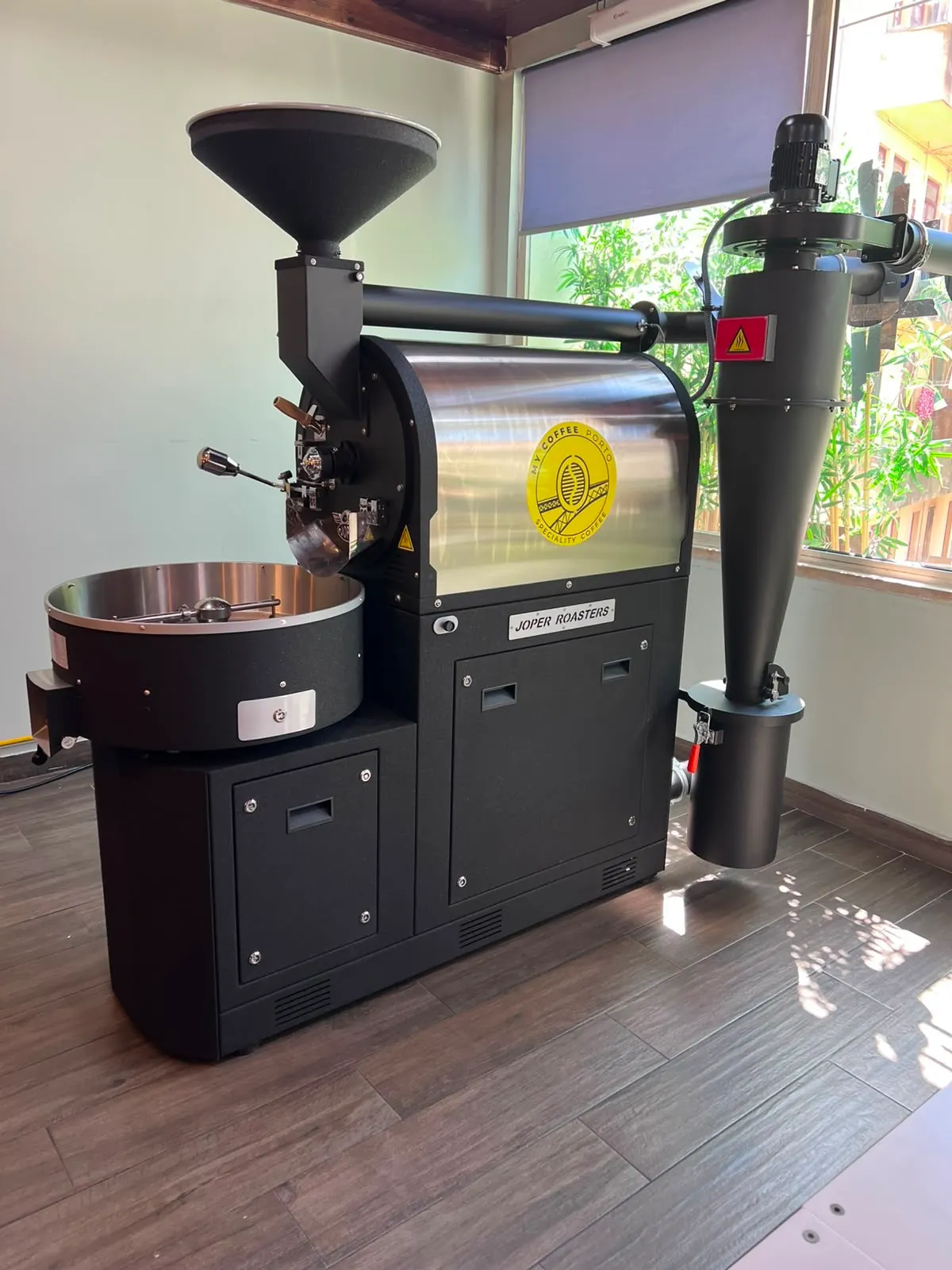
My Coffee Porto belongs to that last group. We started as a single café above the Douro in 2019 and now roast our own specialty coffee on a Joper drum roaster — a Portuguese-built machine — for our four cafés, for our bagged coffee, and under contract for other businesses.
How to read a Portuguese coffee bag
Whichever end of the market you are buying from, the label tells you most of what you need. A roast date rather than only a best-before date is the single most useful signal. After that: the blend composition (look for 'Arábica' versus a blend percentage), the origin, and the roast level.
If a bag names a farm, a varietal, an altitude and a processing method, you are holding specialty coffee. If it names a roast style and a blend ratio, you are holding a traditional Portuguese blend — which, pulled properly and drunk with a pastel de nata at a counter, is one of the better things about this country.