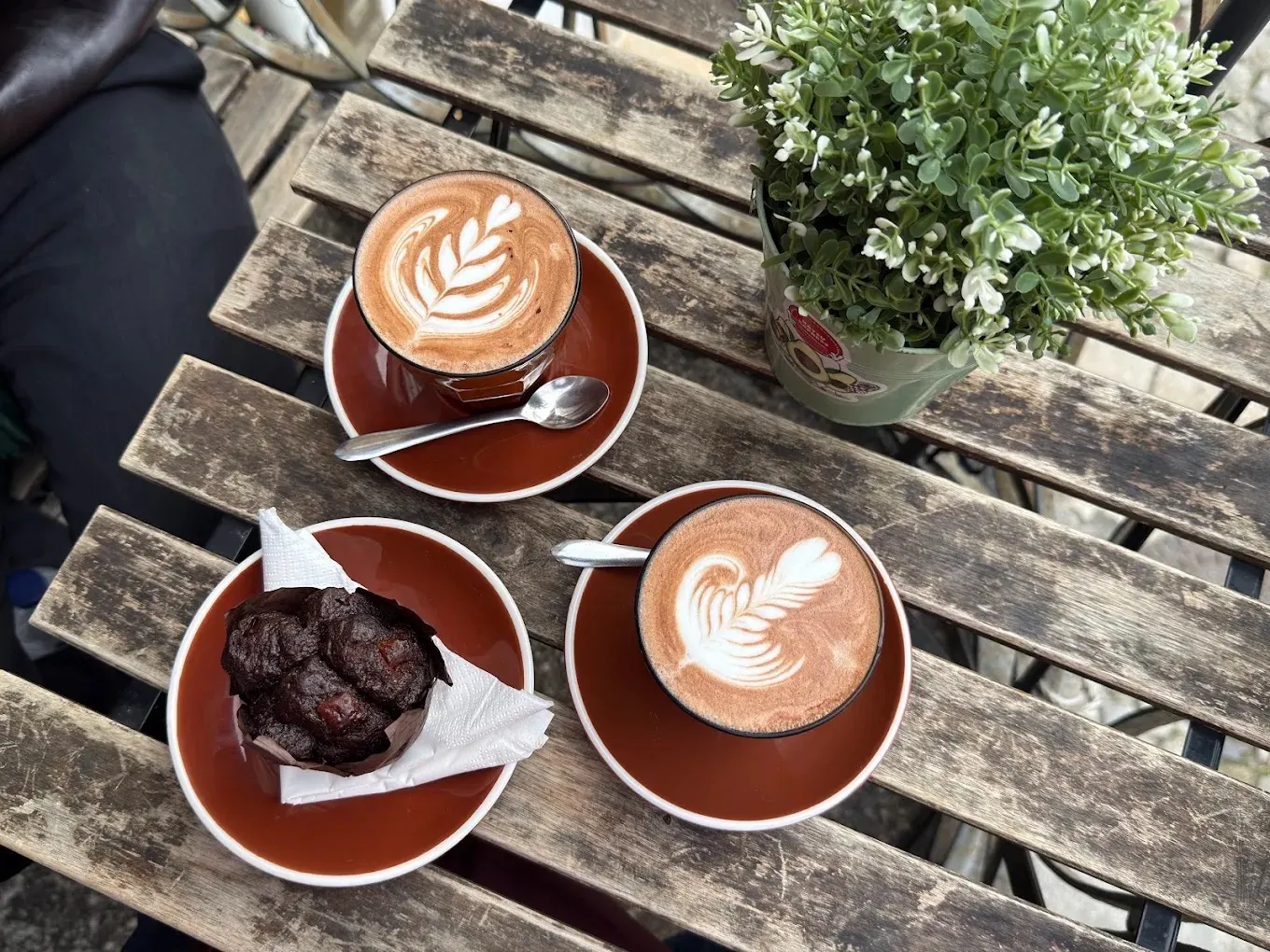
Porto has drunk coffee seriously for a very long time — but the coffee most visitors picture, the short dark bica pulled at a marble counter, is only part of the story. Over the past decade a second scene has grown alongside it: small roasteries, single-origin beans, filter brewers on the bar and baristas who will tell you which farm your cup came from.
This guide explains what specialty coffee means in practice, how it sits next to Portugal's traditional café culture, and how to order well anywhere in the city — whether you end up in our cafés or someone else's.
What 'specialty coffee' actually means
Specialty coffee is not a marketing adjective. It refers to green coffee that has been graded by trained tasters and scored above a defined threshold — in practice, coffee with no primary defects and a clean, distinctive cup. It also implies traceability: you should be able to find out the country, region and often the farm or cooperative a bag came from.
The practical difference you taste is acidity and clarity. A commercial espresso blend is usually roasted dark, which flattens origin character into chocolate and roast bitterness that survives milk and long counter hours. A specialty roast is taken lighter, keeping the fruit, floral and caramel notes that the origin actually has.
Bica, cimbalino and the Porto vocabulary
In Porto, an espresso is often ordered as a cimbalino — a local word, after the La Cimbali machines that arrived in the city's cafés. Elsewhere in Portugal you will hear bica. Both mean a short espresso.
Useful additions: a pingado is an espresso with a drop of milk; a garoto is roughly half espresso, half milk in a small cup; a meia de leite is the larger milk coffee served in a cup; a galão is the same idea in a tall glass, and is what most visitors are actually after at breakfast. Ask for a café cheio if you want your espresso pulled longer, or café curto for a shorter, denser one.
- Cimbalino / bica — short espresso
- Pingado — espresso with a dash of milk
- Garoto — small coffee, about half milk
- Meia de leite — milk coffee in a cup
- Galão — milk coffee in a tall glass
- Abatanado — a longer black coffee, closest to an Americano
Brew methods worth trying
If a café offers filter coffee, it is usually a sign they take their beans seriously — filter shows off a coffee with nowhere to hide. A V60 gives a clean, tea-like cup that suits bright African coffees. A Chemex is slower and rounder. An Aeropress lands somewhere between filter and espresso, with more body.
For milk drinks, a flat white is the best test of a bar: a smaller volume of milk than a latte, so the espresso still has to taste like something. If the flat white is good, the rest of the menu usually is too.
Where to drink it in the historic centre
The specialty scene clusters in the areas you are most likely to be walking anyway: the streets around the Sé and São Bento, the Bolhão market district, and the climb up from the Ribeira. Cafés that roast their own beans are worth seeking out over those that simply buy them in — the roastery-café is where you get the freshest coffee and someone who can actually answer questions about it.
Our own four cafés sit across that same central strip: Escadas do Codeçal on the stairway above the Ribeira, Rua Chã below the cathedral, Bolhão beside the market and Santa Catarina on the shopping street, where our Joper drum roaster lives.
How to judge a café in thirty seconds
You can read a coffee bar before you order. Look for a roast date on the bags behind the counter, not just a best-before. Look at whether the grinder is being used for single doses or scooping from a hopper that has sat all day. Watch whether the barista weighs anything at all.
Then ask one question: where is this coffee from? A café that knows the answer — and can tell you the process and the roast level — is a café that will have thought about the rest.
Taking coffee home
Buy whole bean if you can, and buy small: coffee is best in the two to four weeks after roasting, and a 250g bag is about right for a fortnight of home brewing. If you do not have a grinder, ask to have it ground for your specific method — espresso, filter or French press are meaningfully different grinds.
Roasteries in the city will almost always sell you the same beans they are brewing on the bar, which is the easiest way to take a cup you liked back with you.